How Can I Treat My Plantar Fasciitis at Home?
Treating plantar fasciitis at home starts with understanding how much pain you’re in. Early on, the goal is to settle that pain down. Once things calm, you can shift toward gradually rebuilding your foot’s tolerance. Here’s how we recommend approaching both stages of self-care.
Recognizing Your Pain Level
Before anything else, take a look at how your foot is affecting your day. If you’re limping, struggling to walk, or taking over-the-counter pain relievers to get through the day, we recommend prioritizing self-care and rest to calm your symptoms.
Here are a few things we’ve found to help at this stage:
- Take a break from or reduce activity
- Ice your foot
- Stretch your plantar fascia and calf
- Try self-massage
- Wear supportive footwear
- Use supportive tools
We know slowing down isn’t always easy, but a break is one of the most helpful things you can give your foot. Cutting back on exercise and other activities gives your foot time to recover, so you can begin rebuilding strength with less pain. We’ll share more on each of the other strategies below.
Stretching and Self Massage
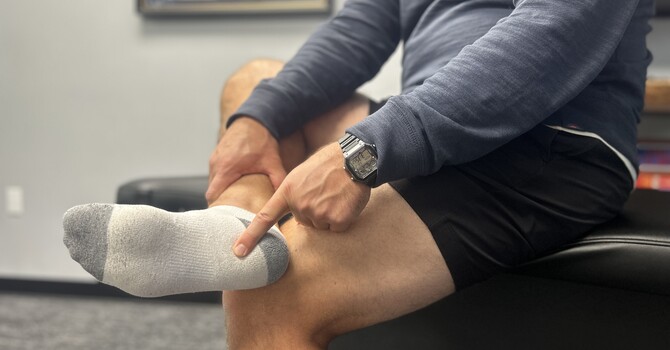
A plantar fascia stretch before your feet touch the ground in the morning can take some of the edge off those first few steps. While sitting up, cross your affected foot over the opposite knee and gently pull your toes back toward your shin until you feel a stretch along the bottom of your foot.
Calf stretching can also be helpful. With your hands against a wall, step one foot back, keeping that heel on the ground and your toes pointing forward. Gently lean forward with your back knee straight until you feel a comfortable stretch in your calf.
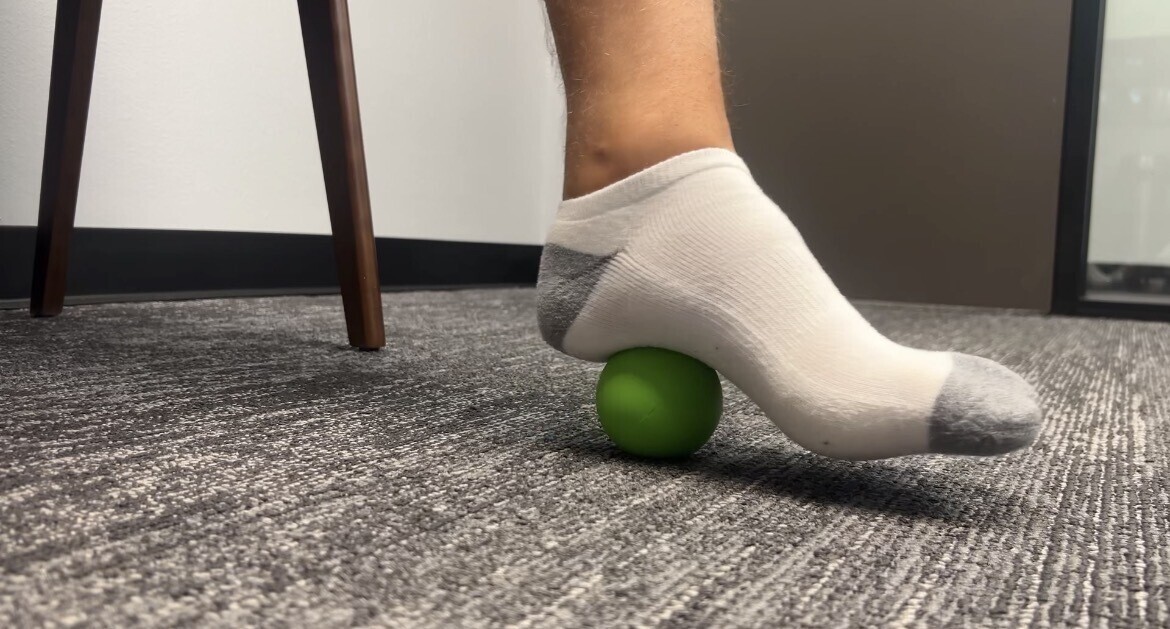
For additional relief throughout the day, you can use self-massage to ease some of the tension. Roll the bottom of your foot over a golf ball, tennis ball, or frozen water bottle. If your foot is especially sensitive, a softer ball and lighter pressure may feel better.
Calming Things Down With Supportive Tools
There are a few tools you can also use to help manage your plantar fasciitis symptoms.
- Night splint: Holds your foot in a stretched position overnight so those first steps in the morning aren’t so bad. It can be uncomfortable to wear in bed, so many people choose not to, but it’s worth considering.
- Over-the-counter orthotics: Add cushioning and arch support to help reduce strain on your plantar fascia.
- Arch supports: Plantar fasciitis supports that slide over your foot and support your arch.
- Low-dye taping: A self-taping technique that supports your foot (demonstration below).
Choosing Supportive Footwear
While your foot is recovering, it’s best to avoid walking barefoot and choose supportive shoes, even around the house. Keeping a pair near your bed or by the door makes it easy to slip them on. When you head out for the day, sneakers with good arch support are a great choice, especially if your work allows it.
Try to steer clear of shoes that are uncomfortable or don’t support your arch, like many business shoes and high heels.
Rebuilding Your Strength
Once your pain has been managed and you’re backing off the self-care, the next step is to gradually increase how much work your foot and calf can handle.
- Keep stretching your plantar fascia and calf
- Try introducing calf raises with a rolled towel under the ball of your foot and toes, which loads the plantar fascia slightly more than a standard calf raise
Supporting Your Recovery
These steps give you a place to start, and staying consistent can help you build on that progress. If heel pain has been lingering and you’re having trouble moving forward, we’re here to help. Book an exam so we can take a closer look and work with you on a plan.

Steven Reinlie, DC
Contact Me